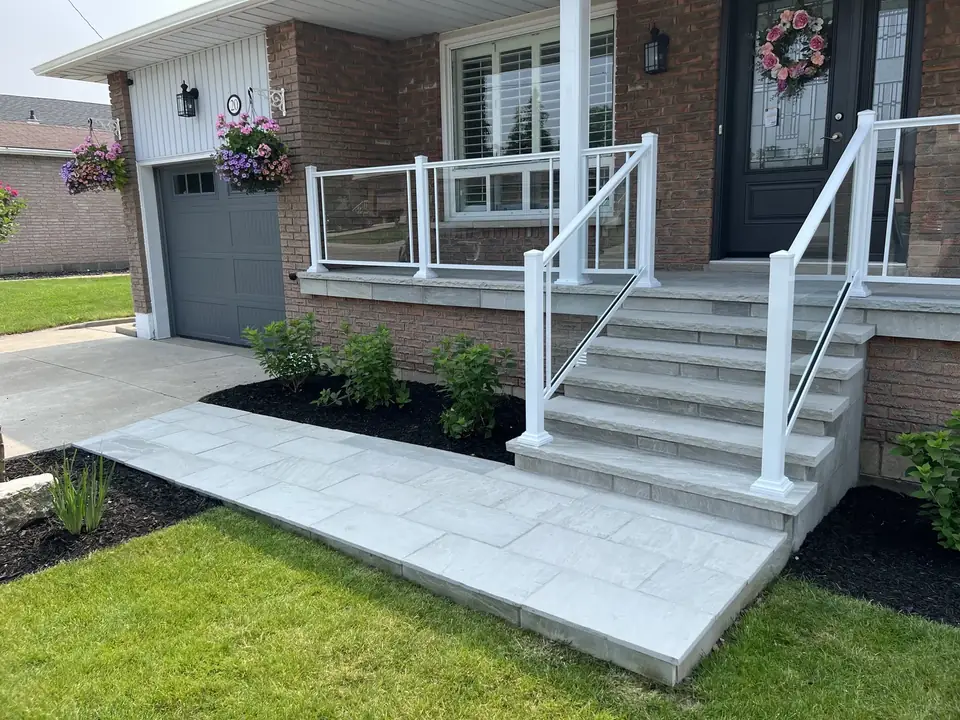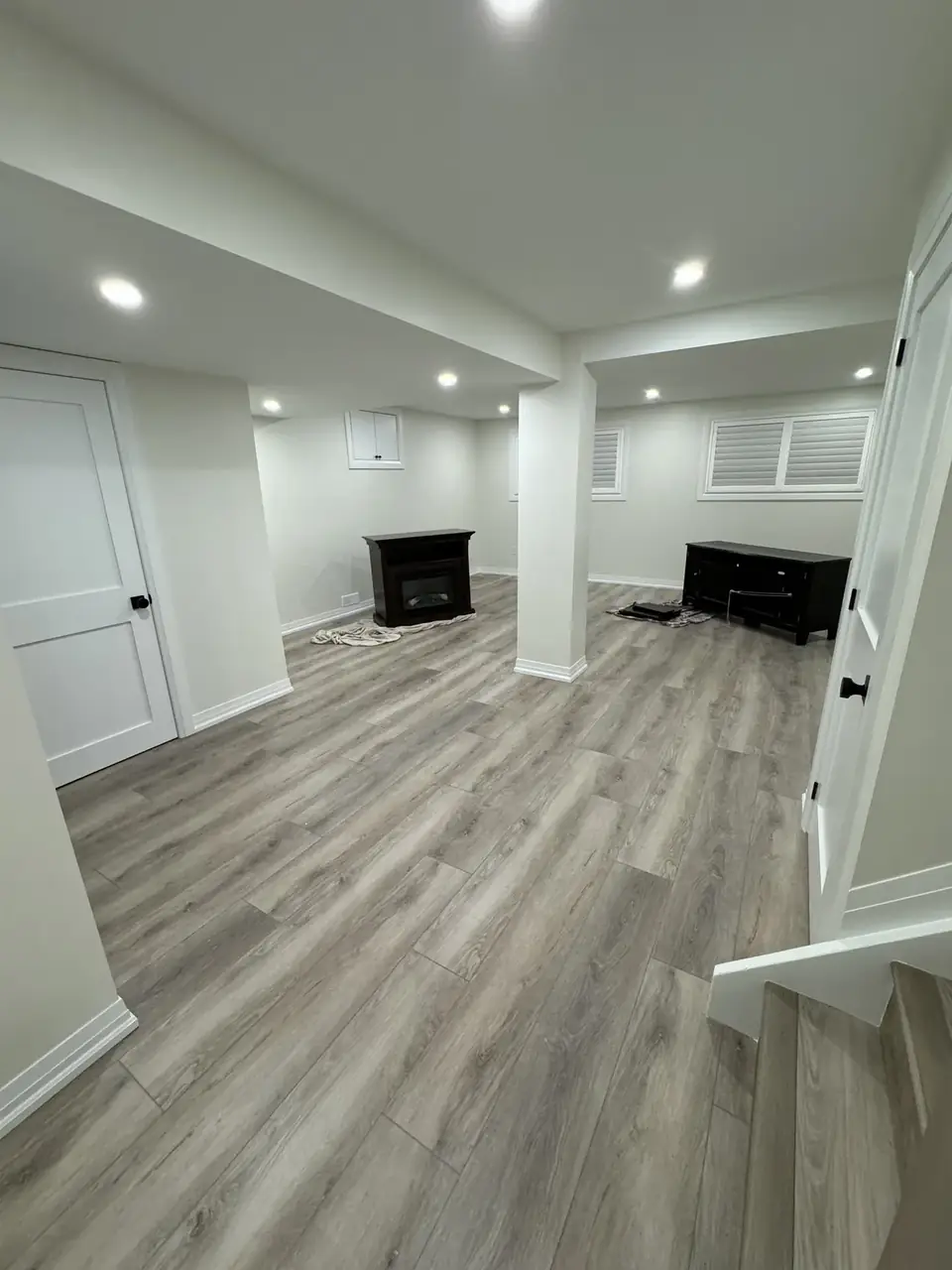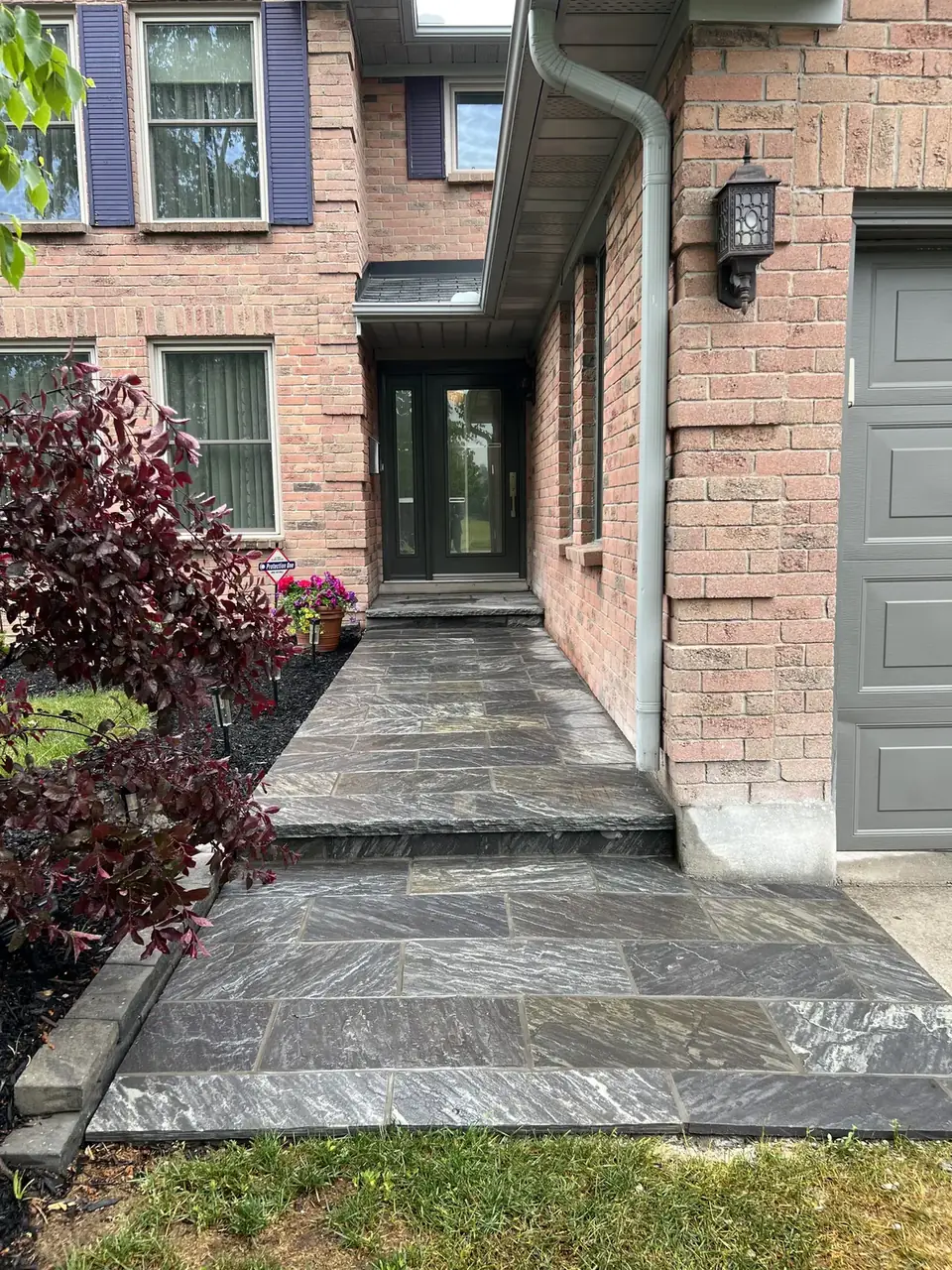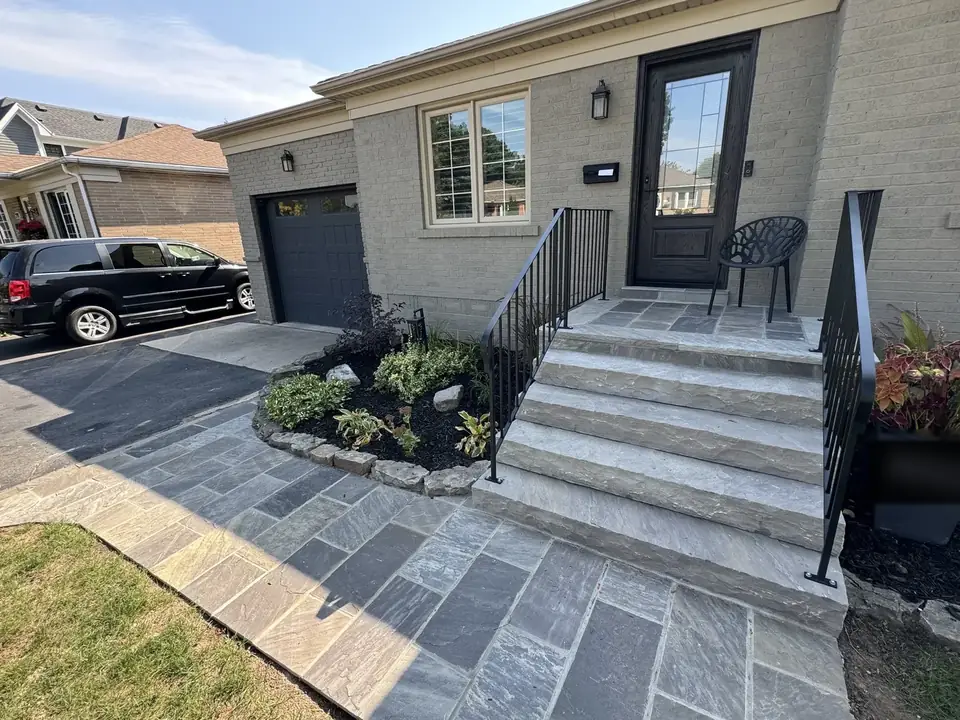
Here's how that plays out for each part of the house, and what to do this month.
Outdoor concrete and masonry need warm weather
Concrete and mortar don't like the cold. Ontario's Building Code sets extra rules once the air drops below 5°C:
- Concrete has to be kept at 10°C or warmer for 72 hours after it's poured.
- Mortar and masonry have to stay at 5°C or warmer while they're laid and for 48 hours after.
Those rules can be met in winter with heat and insulated covers. Most homeowners would rather not pay for that, or wait out a cold snap halfway through their front steps.
So the outdoor season in Hamilton runs roughly from spring to fall. That covers:
- front porch rebuilds and porch repairs;
- concrete steps and walkways;
- natural stone, flagstone and brick work;
- retaining walls, fencing and decking;
- soffit, fascia, eavestrough and siding;
- exterior waterproofing around the foundation.
Spring brings its own catch: the ground is still thawing and wet. Fall gives you cooler, steadier days, as long as the work is finished before the hard frost.
Indoor rooms can be renovated in any season
Inside the house, the weather barely matters. A kitchen, a bathroom or a basement is built in a heated space, so the calendar is about your life, not the forecast.
Kitchens. The best time is when you can live without one for a while. Plan around the holidays and big family events, not around the season.
Bathrooms. Any time of year works. If it's your only bathroom, plan where everyone showers while it's out of action. Swapping a tub for a walk-in shower is a smaller job than a full redo, so it fits more easily around the rest of the year.
Basements. Winter is a good time to finish a basement. The crew works in a warm space, and the room is ready by spring. Egress windows are the exception: cutting through the foundation wall is outdoor work, so plan that part for warmer weather.
Fall is the time to plan next year's outdoor work
If the outdoor season is spring to fall, the planning has to happen before it. Before work can start, a few things need to be in place:
- a visit to look at the job;
- a scope you agree on;
- a price;
- for many porches and decks, a building permit from the City.
The City of Hamilton generally requires a permit for a deck or porch attached to the house. Enclosing a porch counts as an addition. Our permit guide explains what applies.
Doing that groundwork in the fall and winter means the job is ready to go when the weather is. Waiting until the first warm week of spring means doing all of it at once, at the same time as everyone else on your street.
Planning early gets you the start date you want
Early planning doesn't mean signing anything early. It means you have time to:
- see the job priced properly, at a free consultation in your home, rather than guessing from a website;
- decide on materials without rushing: poured concrete, natural stone or flagstone for a porch; tile and fixtures for a bathroom;
- sort out the permit, if the job needs one, before the season starts;
- pick a start date that suits you, rather than whatever is left.
For indoor work it matters less. Even so, a kitchen planned over the winter is a calmer kitchen than one planned in a week.
What to do this month if you want a porch next summer
If your front steps are cracked, the porch is heaving, or the stone is coming loose, here's a short list for the fall:
- Take photos of the problem now, including the cracks, the low corner and the loose stone. They help at the consultation.
- Write down what you want: a repair, or a full rebuild. Concrete, stone or something else. Railings or none.
- Book a free in-home consultation. We look at the porch with you, talk through the options and price the job. There's no obligation.
- Ask about the permit while there's time to get it.