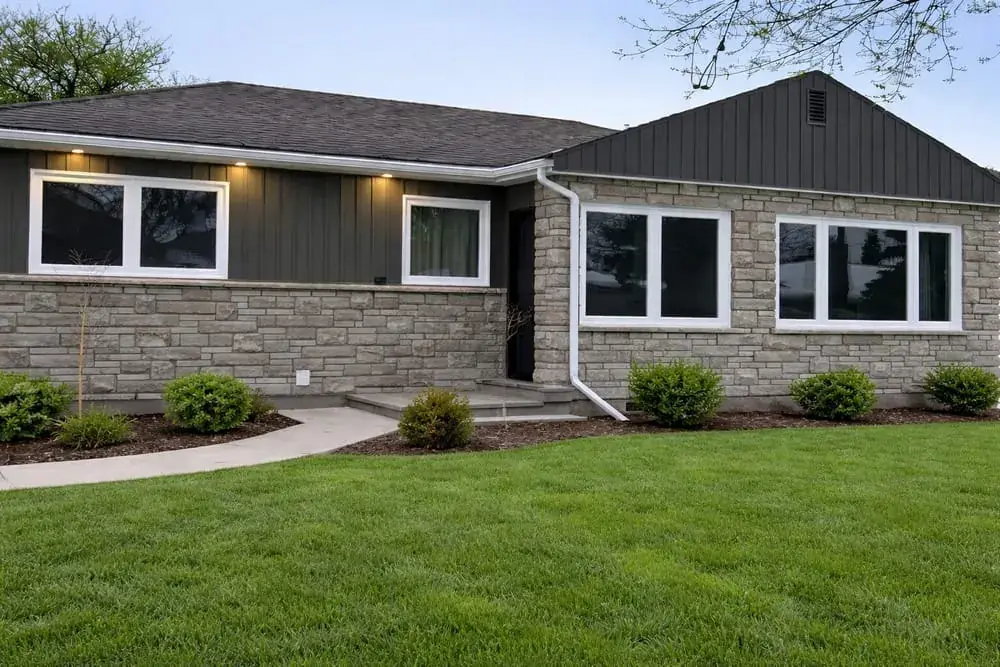
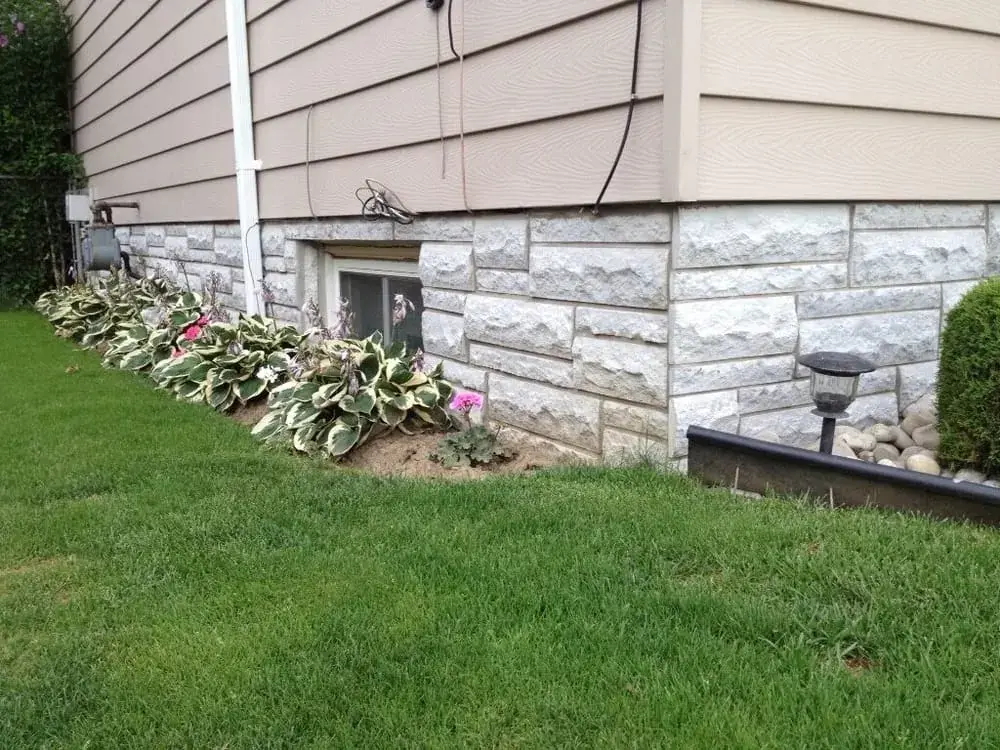
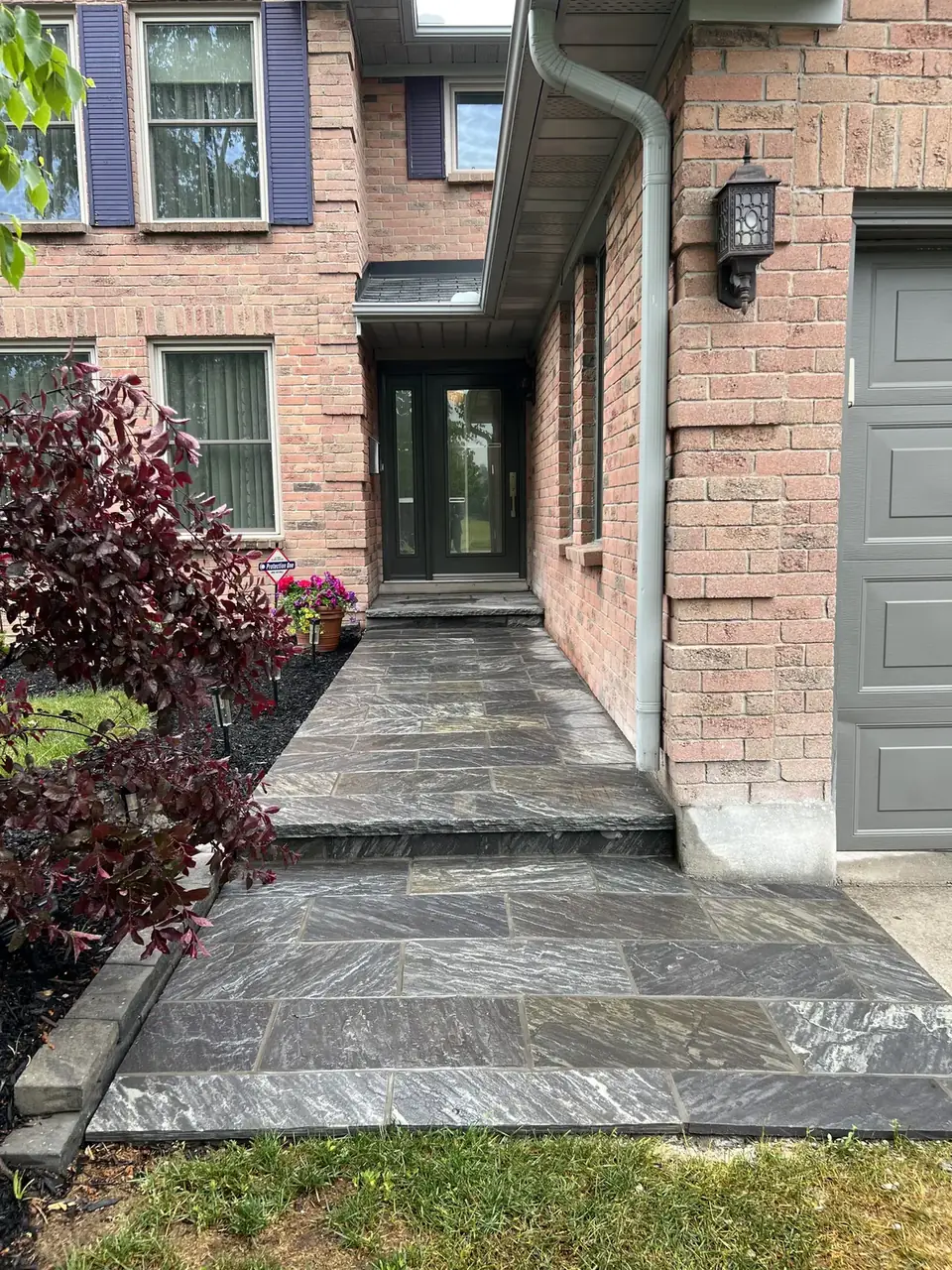
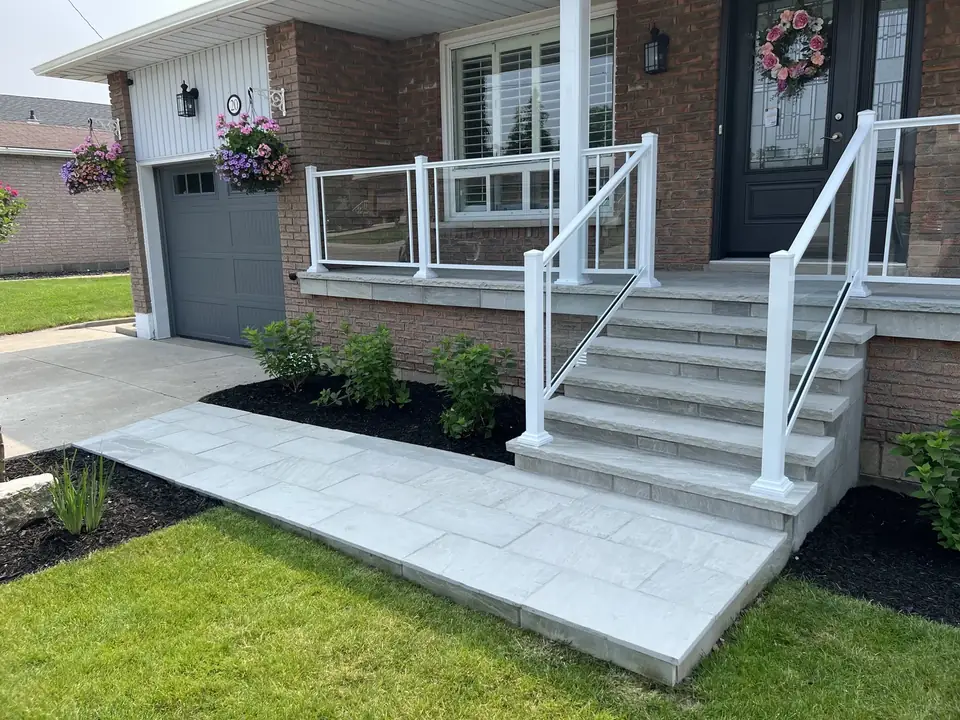
Hairline cracks across the stone on the front of the house
A fine crack runs across a few stones, or along the mortar between them. It wasn't there last year.
Most stone veneer on houses is one of two kinds. Some is natural stone. A lot is manufactured stone, which the National Concrete Masonry Association describes as made from concrete to look like natural stone. Adhered veneer is mortared to the wall over metal lath, not stacked as a separate wall.
That makes it sensitive to the wall behind it. The same NCMA guide says wood sheathing swells when it gets wet, and without a gap between the sheets that swelling cracks the veneer. Framing that was wet when the stone went on shrinks as it dries, which can crack it too.
A crack also lets water in. NCMA warns that it can then damage the sheathing, the veneer and the framing.
Why is my stone veneer falling off?
A stone has come loose, or one is already on the ground. That usually means the bond or fastening behind it has failed.
The NCMA guide is specific about this. The lath that holds the mortar has to be fastened into the studs. Sheathing alone doesn't have the holding power, and a fastener in sheathing only can work loose, especially once the sheathing gets wet. Proper fastening is what keeps the veneer from coming off in high wind.
The guide also says a stone that gets bumped after the mortar starts to set should come off and be reset. A stone that was disturbed and left can be the first one to go.
One loose stone is worth a look at the whole wall.
Why water behind veneer matters
Masonry veneer isn't waterproof, and it isn't meant to be. The Brick Industry Association describes veneer walls as drainage walls. Water that gets through the veneer is meant to run down behind it and out through flashing and weeps at the bottom. Behind that, a water-resistive barrier keeps out any water that crosses the gap.
Adhered stone works on the same idea, with less room. NCMA says the standard for adhered manufactured stone calls for two layers of water-resistive barrier over wood sheathing, lapped like shingles, tied into flashing so water drains out.
If those layers are missing or torn, water sits against the wood. That's when you get the cracking and loosening above. The BIA's note on adhered veneer warns against anything that traps water behind it, because trapped water freezes and thaws.
A stain or dampness inside, behind a stone wall
There's a damp patch or stain inside, on a wall with stone outside.
That fits water getting past the outside layers. The BIA says the gap behind veneer is what stops water passing straight toward the inside. The NCMA guide lists flashing at every opening and transition, tied into the barrier. Windows, doors, vents and roof lines are the usual weak spots.
Call about this one soon.
Cracks near the bottom, where the stone meets the ground or a step
The bottom rows crack, or the stone looks stained and crumbly near the soil, a step or the driveway.
The bottom of the wall has its own rules. NCMA lists minimum clearances between adhered stone and the soil, and between stone and paving. Stone buried in soil or mulch stays wet. The BIA says the base needs flashing, and that it also acts as a break between masonry and the concrete foundation. Masonry expands and concrete shrinks, so bonding them together causes stress. NCMA adds soft joints where different materials meet, so the wall can move a little.
Water and salt add to it. NCMA says to keep de-icing salt off the stone, and to aim downspouts and sprinklers so they don't keep wetting it.
What's safe to check from the ground
Stay on the ground. No ladders, and don't push or pull on stones.
- Walk the house after rain. Note where the stone stays dark longest.
- Look at the bottom row. Is soil, mulch or a step right up against it?
- Check downspouts and sprinklers near the stone.
- Look for cracks around windows, doors and vents.
- Indoors, check that wall for stains.
If a stone is loose above a door, a walkway or a step, keep people clear of it and call. Keep any fallen pieces.
How long does stone veneer last?
It depends far more on what's behind it than on the stone. A wall with intact barrier layers, flashing, fastening and clearance at the bottom has what it needs. One missing any of them can fail early. The BIA recommends looking it over every year: loose units, cracking, the joints. A loose stone is easier to fix than a wall coming off.
If your house is a designated heritage property
The City of Hamilton's Heritage Permits page lists new cladding, including "masonry veneers", among work that needs a heritage permit on a designated property or in a Heritage Conservation District. Small repairs with the same materials usually don't. If you're not sure whether your house is designated, ask the City first. Our permits page has more on Hamilton permits.
What we do
Albany Contracting Group does stone veneer, brick work, stucco and exterior facades on Hamilton houses. We look at the wall with you: where the water gets in, what's loose, what's behind it. If the layers behind are sound, the repair can be small. If they aren't, we take the stone off that section, fix what's behind, and put it back so it stays on the house. It's all priced at the free in-home consultation, once we've seen the wall.
See our stone veneer and facades work.
Brick flaking too? Read why bricks flake.